Building Arabic-First Enterprise LLMs: Overcoming Global Model Limitations for GCC Corporations
Why global generative models struggle with Omani commercial law, Arabic morphological nuances, and corporate culture, and how domain-adapted sovereign LLMs solve the enterprise knowledge problem.
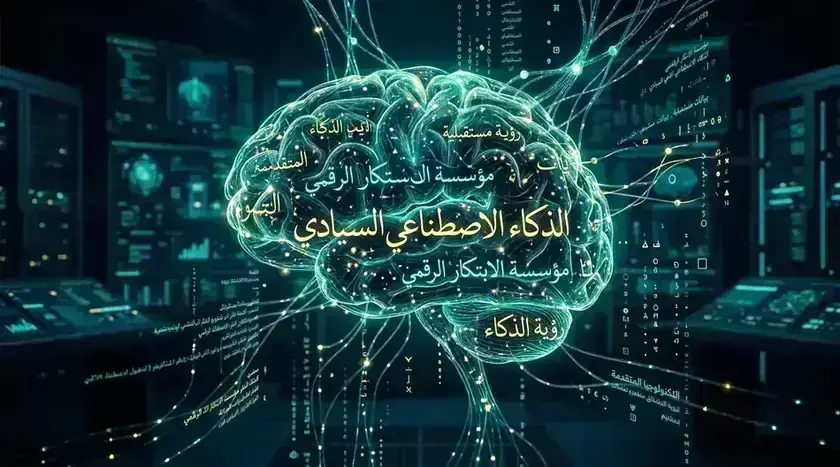
The Structural Flaws of Anglo-Centric Foundation Models
The overwhelming majority of global frontier models dedicate less than 2% of their pre-training token budgets to Arabic text. Consequently, their tokenizers split single Arabic words into multiple inefficient sub-word fragments, drastically increasing inference compute cost and degrading semantic coherence across nuanced Arabic sentences.
Legal, Commercial, and Cultural Nuances in the GCC
Enterprise knowledge workflows require deep precision. Generic models struggle when reconciling conflicting clauses between the Omani Commercial Companies Law and bilateral tax treaties, or parsing tender specifications written in formal Arabic technical prose. Hallucinations in these domains carry substantial financial and regulatory exposure.
The Sovereign Architecture: Private Continuous Pre-Training
IIT Oman deploys domain-adapted architectures: taking state-of-the-art open weights, extending the Arabic tokenizer vocabulary with 32,000 domain-specific tokens, and executing continuous pre-training on curated Omani legal, commercial, and engineering corpora hosted within local secure enclaves.
Measurable Enterprise Impact in Muscat
Organizations implementing sovereign Arabic models report a 3.4x improvement in internal search accuracy, 70% reduction in executive document review latency, and unconditional confidence that confidential strategic deliberations never leave Omani borders.